Every day, your customers, patients, students, and employees try to reach your organization. Some of them are Deaf or Hard of Hearing, and communication doesn't work the way it should.
Since September also happens to be Deaf Awareness Month, this gives you an opportunity to consider a simple but important question:
Can your organization communicate with the Deaf and Hard of Hearing people you serve in a way that works for them?
It depends on which Deaf and Hard of Hearing person you ask. You might hear "sure," "it's close," "maybe," and probably a few "no" responses.
Why? A customer may need a third-party interpreter just to call customer service. A patient may have to rely on a voice-to-text tablet to discuss their care. A student or employee may run into a system that simply wasn't built with their communication needs in mind.
These obstacles carry real costs: frustrated customers, unresolved questions, communication that doesn't come through accurately, a worse patient experience, and weaker long-term relationships. Businesses already know how much experience shapes loyalty. Communication access is part of that experience, too.
So, consider another question: what would it take for every Deaf and Hard of Hearing person you serve to answer with an emphatic "yes"?
At CSD Access, we believe better communication begins with connection, not just access. We're built by and connected to the Deaf community, so our approach comes from the people who experience these obstacles firsthand, and we work with businesses, government agencies, healthcare organizations, and educational institutions to close that gap.
But what if your organization already provides access? What comes next?
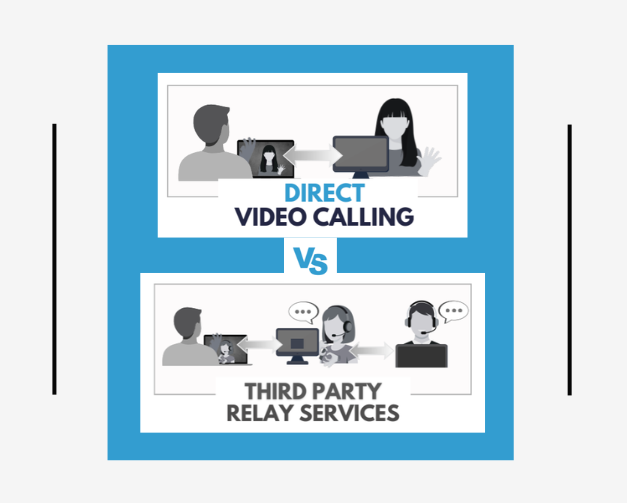
Many organizations already offer accommodations: Video Relay Service (VRS), Video Remote Interpreting (VRI), qualified interpreters, or captioning. These give access. But most still route the conversation through a third party.
Direct Video Calling (DVC) closes that last gap. A Deaf customer connects directly, in sign language, with a representative who signs, no interpreter relaying the conversation between them. For the customer, that means less waiting, greater privacy, and a more natural conversation. For the organization, it means fewer misunderstandings, stronger relationships, and a system that tells Deaf customers they were considered when it was designed.
Organizations using DVC have shown:
The FCC recognizes DVC as the accessibility standard for Deaf and Hard of Hearing customer communication. Millions of people in the US use sign language, and they are customers who want to do business with organizations that serve them in their own language.
But here's the truth: one size does not fit all when it comes to communication access.
Different situations call for different solutions: DVC and direct support for everyday contact, qualified interpreters for meetings and appointments, live captioning for events and media. The right mix depends on where your Deaf and Hard of Hearing customers, patients, students, or employees actually need it.
Your organization may already be doing many things right. The next question is this: are there still moments when a Deaf or Hard of Hearing person has to take an extra step that everyone else doesn't?
Sometimes, better accessibility isn't about adding another accommodation. It's about removing that extra step.
Deaf Awareness Month can start conversations, but real connection extends far beyond one month.
So how do we move from awareness to action?
Identify where Deaf and Hard of Hearing people encounter extra steps in your customer, patient, employee, or constituent journey. Then talk with CSD Access about the communication solutions that best fit those moments.
Learn more at csdaccess.org.